

Post #2 for Digital Media Issues (Defining Digital Media)
“What’s digital media?” my friends ask any time I remind them of my role or degree plan. To that I say…”pretty much any of the things that you consume digitally.” This can apply to apps, streaming platforms, social media, websites, programs, etc. When the degree plan was Mass Communications I answered similarly, but with more inclusion of print materials (magazines, newspapers, books, flyers, etc.) and pointed specifically to its desired use to reach mass audiences rather than niche groups.
Digital media is both less inclusive of all media and more inclusive of audience size. Who are you hoping to reach? Your friends only? That’s social media, or direct communication via a choice digital platform (SMS, text, WhatsApp, etc.). Are you hoping to reach a broad audience within a certain radius? That’s mass communication via a choice digital platform. Is your message for a very specific group of professionals? Again – semi-mass communication via a choice digital platform.
“Digital media” can also apply to things that are not necessarily designed explicitly for communication or knowledge transfer. This can be gaming, selling, geographic interface systems, among other, less news-based or persuasion-based information transfer.
Rather than focusing specifically on the term “digital media,” I would argue utilizing a term more like that which Dennis Baron uses in his article Pencils to Pixels–communication technology–may be more effective. This term narrows the focus of technological use back down to communication-specific use-goals. Yet the term “technology” focuses more on the device of creation rather than the body of work or modality of information transfer.
“Communication media” is more apt considering it focuses on the use-goal while encompassing the body of work and modality(ies) of information transfer.

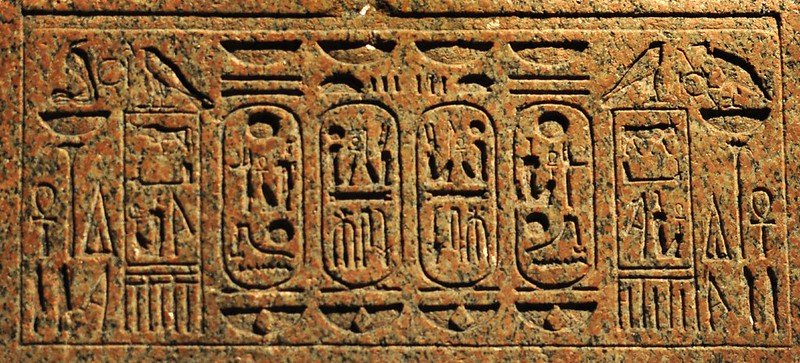
This term has the capacity to encompass communication media throughout time (as demonstrated in Figure 1 of Pencils to Pixels, and hieroglyphics, both depicted above), and can extend to include conversations, speaking, teaching, and speeches. As Dennis Baron notes “even today, most written text does not transcribe spoken language…” The medium of verbal transfer cannot be excluded – one significant and vital modality of information transfer that would be left out should the terminology be either “digital media” or “communication technology.”
Communication media is the most inclusive term and might be considered for the rebranding of the Masters Program should the school opt to return to a more inclusive approach. Yet this course is designed to address digital media specifically which does focus less on in-person spoken word, less on print material, and more on the forms of communication which are housed in the virtual world.
As Cindy Royal points out in Thinking Critically About New Media, a university must address “Which skills are relevant to students seeking communication careers?(2011, p.14)” and currently, the answer to that is specifically digital media skills in this era of rapid developments in digital programming and platform offerings, artificial intelligence, virtual and augmented reality, and increased dependence upon- and coexistence with- digital and virtual culture. This program started as Mass Communications when most of that work was either television or print material. Back in 2011, Royal points out “a growing number of position descriptions…include the following requirements (2011, p.16)” going on to list skills such as web design, coding, sound editing, etc.
Royal also acknowledges that Ric Jensen has noted vital considerations for the rise of digital media as depicted below in Figure 2.

 Sarah Wingfield
Leave a comment